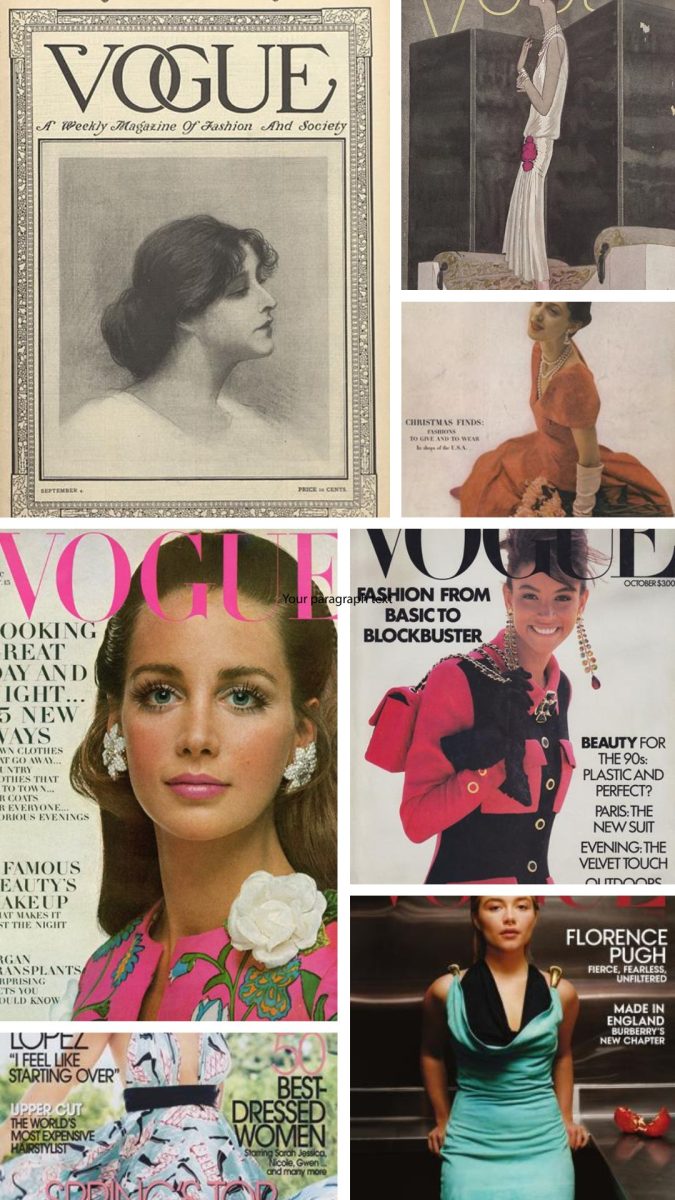
Over the years, fashion has evolved tremendously. Coming from makeup, jewelry, fabrics, and the way accessories are styled, over the years there are trends that occur shaping the way society dresses.
Let’s take Vogue, an American fashion and lifestyle magazine for example. Founded by Arthur B. Turnure in New York City as a weekly newspaper, Vogue published their first edition on Dec. 17, 1892. At this time, Vogue wasn’t just fashion based, instead it was a high-society paper that was weekly for New York’s socialites that mentioned news, etiquette, and reviews about books, plays, and music. However, nowadays, Vogue focuses mainly on celebrities and their lifestyles, bringing in more inclusivity with fashion choices and ways to express oneself. In 1909, Condé Montrose Nast, the founder of Condé Nast Productions, bought Vogue and rebranded the newspaper to be a magazine revolving around women’s fashion illustrating beauty, emotion, and creativity in every painting (but then transitioned to photography in 1932). If Nast weren’t to take over Vogue in 1909, it wouldn’t have become as prominent since he rebranded Vogue to be a luxurious lifestyle magazine with gifted photographers and an art director who helped embrace the modernized fashion industry.
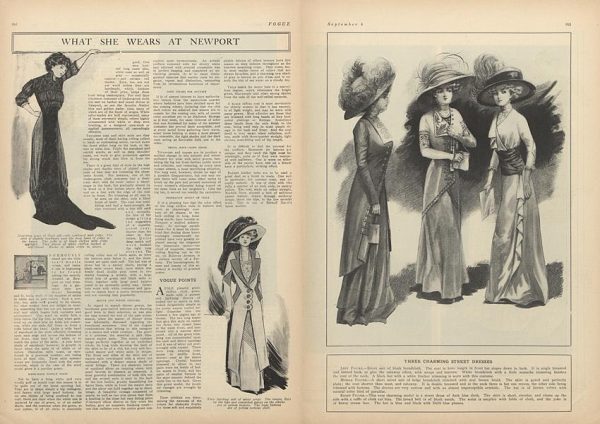
1900s:
Looking at the magazine published Sept. 4, 1909, named, “What She Wears at Newport”, modest dresses using materials such as silk, satin, and chiffon were popularized, along with high wasted, flowy, draped dresses which captured having grace, having a good social status, and wealth. The way women dressed in this time period depicted elegance and class with the large, luxurious hats with trims of lace, feathers, flowers, and ribbon.
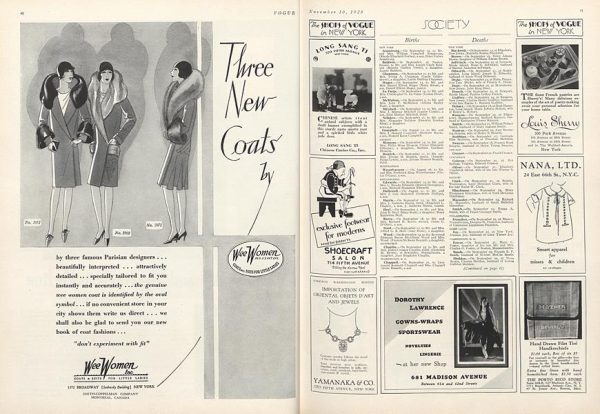
1920s:
Transitioning into the 1920s, there are slight changes in the way women dress as you skim through the magazine, Society, published Nov. 10, 1928. Floor length dresses altered to be tighter around the waist turned into ‘flowier’ ones that came down to your mid-calf or ankle, and minimal, elegant dresses with delicate embroidery turned into heavily beaded, sequined, and fringed dresses with geometric patterns and shapes embedded into them. It is common to see cloche hats, sparkling earrings, bangles, and cuffs, along with beaded or pearled necklaces styled. This era of fashion resembles expressing your creativity, including more modern pieces of clothing and accessories, along with representing yourself in a confident, glamorous way.
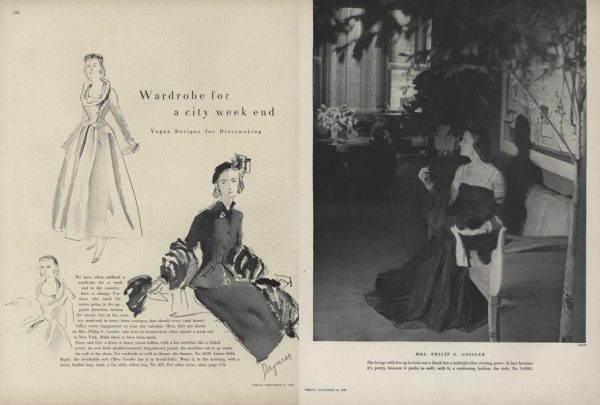
1940s:
Published Nov. 15, 1948, the article, “Wardrobe For a City Weekend” compared to “Society” published in the 1920s shows a vast difference in the way fashion has evolved especially since photography is now being used for magazines and articles instead of hand-drawn illustrations. Couture dresses and blouses made with silk, satin, organza, and chiffon were worn that had an effect of cinching your waist. During the daytime, fabrics such as wools, crepes, and gabardines were worn. Blouses or dresses often had neutral tones, pastels, or rich tones depending on the event, subtle prints and smooth fabrics were worn a lot which gave a “minimalized look” and elegance. Additionally, low-heeled shoes were often worn along with pumps. Gloves were worn if there was any occasion needing to be dressed formally, and tilted, small head pieces were used which gave a feminine look.
1960s:
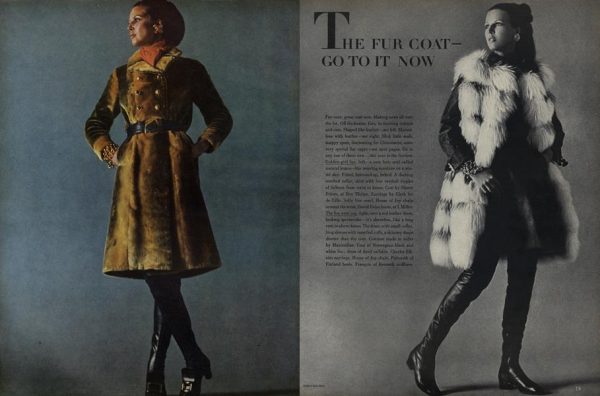
Every era of fashion has captured the trends occurring shaping the way society dresses and expresses themselves, especially shown in the Vogue article, “The Fur Coat- Go To It Now” published Oct. 15, 1968. Fur coats became popularized as a ‘staple piece’ in a wardrobe which were perfect for adding personality to a basic outfit. Knee high boots were also seen as a chic shoe to style a trench or fur coat. When it came to jewelry, either statement pieces for necklaces or earrings were worn often or minimal ones rather than layering a lot. The article showed how fashion was slowly becoming modernized and allowed more expression in outfits with fun patterns, different types of fabrics put together to make a unique outfit that stands out, statement pieces of jewelry, and bold, colorful makeup.
1980s:
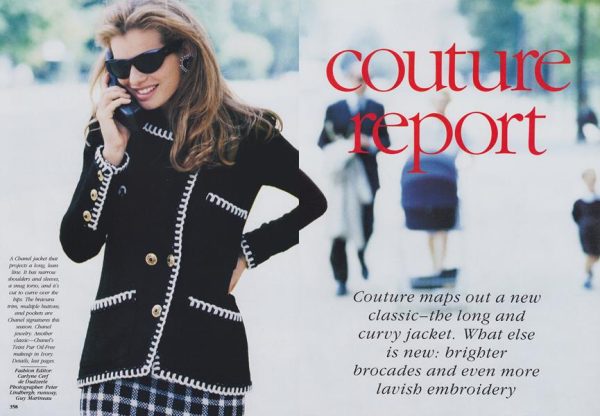
Couture is a type of clothing that is high-end and custom-made for specific clients. In the 1980s, a jacket made of the finest materials with detailed embellishments became the new trend among many women which symbolizes the structured, luxurious appearance that was popularized. Skirt lengths went from being below the ankles to usually knee-length. Additionally, designer handbags were worn among many due to their logo which influenced many customers to buy for the logo, and silver/metal hardware, and unique patterns woven into the bag. Accessories such as gloves and headpieces were used, but not as much so when looking at an outfit, one can see the statement piece being the blouse, dress, or skirt, rather than just the chunky statement jewelry. The evolution of couture in the 1980s, shown in the Vogue article published Oct. of 1989, “Couture Report” showed how the clothes a person wears is a form of art that shares a story on one’s identity.
2000s:
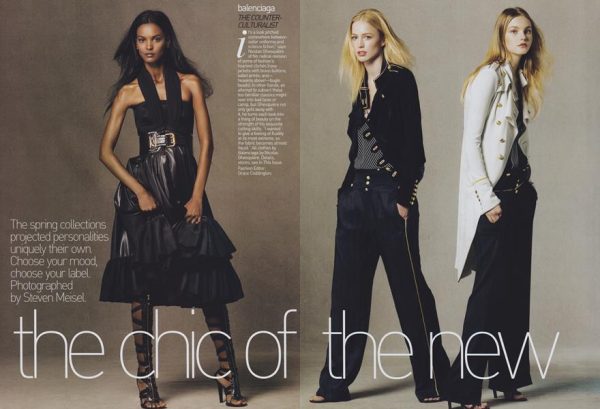
In the Vogue article, “The Chic of the New” published Jan. of 2005, there is a vast difference when comparing it to fashion in the 1900s, since traditional dresses and skirts aren’t just worn, but suit pants and blazers, styled with open-toed heels and minimal makeup that enhances one’s facial features. Instead of chunkier jewelry pieces, more embellishments or gold/silver hardware is added to clothing to add a sense of uniqueness to the outfit. This Vogue article shows how you can project your personality by the way you choose to dress, allowing women to express themselves creatively.
2020s:
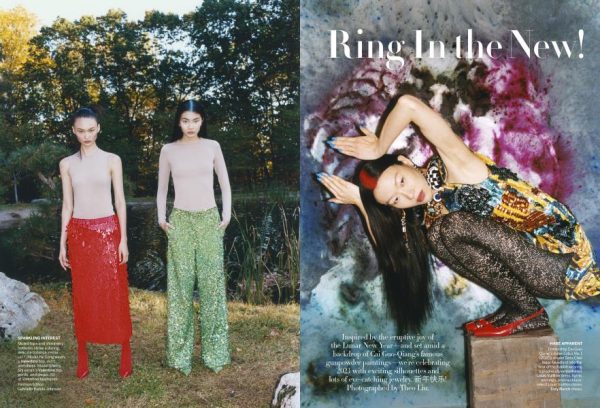
Comparing the Vogue article, “What She Wears at Newport” published Sept. 4, 1909, to the Vogue article, “Ring In the New!” photographed by Theo Liu in Winter of 2023, it shows how trends and social media have impacted the view women express themselves through different colors and accessories worn. In 1909, wearing longer, more modest dresses that cover legs and arms was common to see, however, in 2023, fashion has been shaped from trends all over the years, but more modernized. Seeing the woman to the right, she mixed different fabrics, lace tights with a structured, abstract dress, a statement necklace, red hair from the roots and to match, red ballet flats. The woman has a unique way of displaying her confidence, bold energy.
Overall, fashion has evolved tremendously over the years, little trends being picked up year after year to be woven into society’s norms of fashion and the way someone dresses. From the 1960s’ fur coats, to suit pants and blazers, each era is immortalized in the clothes people wear now, being a mash-up between all the eras.