


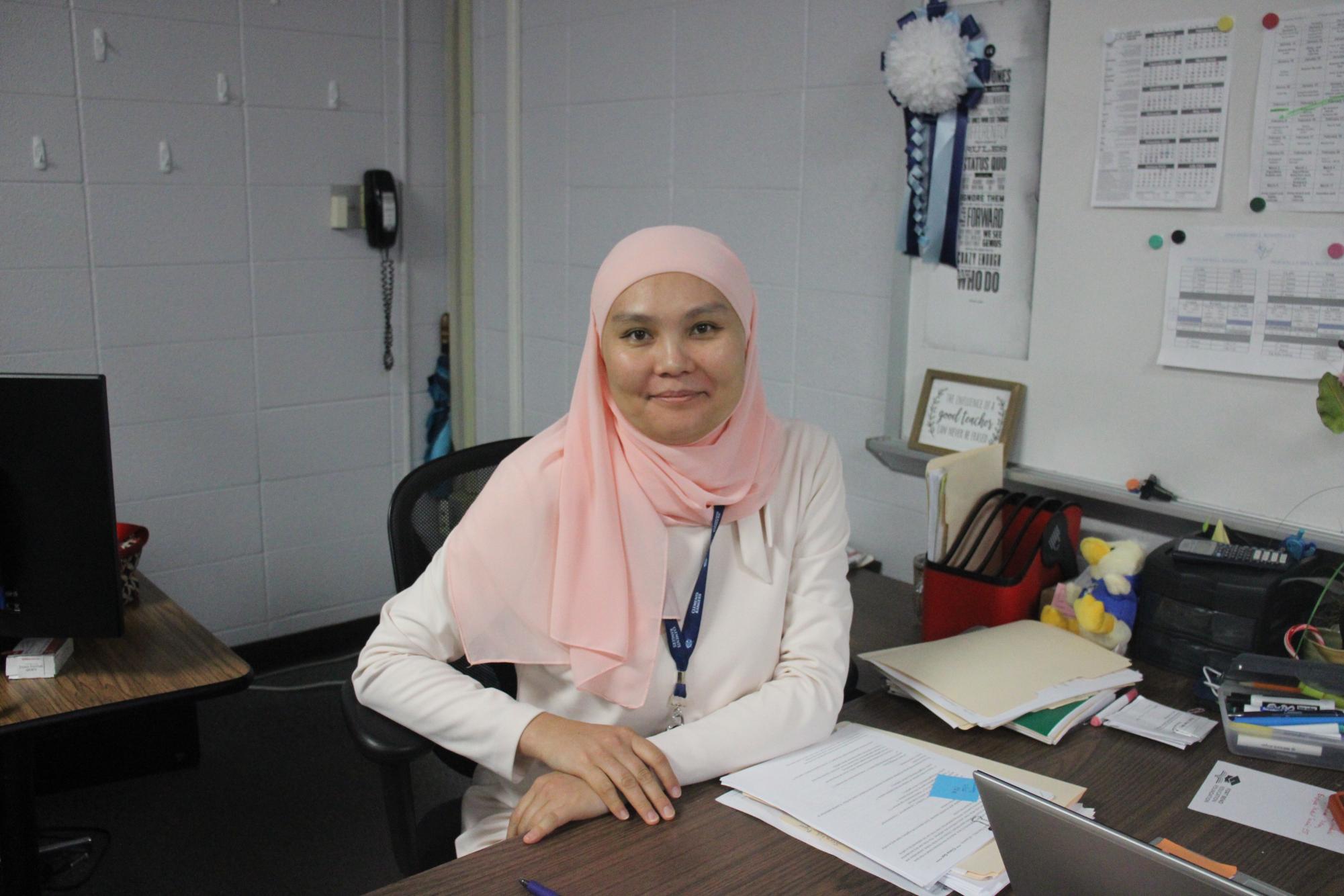
In a classroom filled with lines of code and problem solving challenges Computer Science teacher Botakoz Sadykova helps students discover that computer science isn’t as intimidating as it seems. She also speaks four languages: Kazakh, Russian, Turkish and English. It’s a small detail, but one that reflects the diverse experiences she brings into her classroom every day.
From the moment students walk into her classroom. Sadykova wants them to feel calm, supported and ready to try. While this is her first year teaching in Fort Bend ISD, Sadykova brings more than a decade of experience in computer science education and a global perspective shepherded by her journey from Kazakhstan to the United States.
“I realized that I like working with people, the interacting,” Sadykova said. “I believe education is the way to have an impact, a positive impact.”
Sadykova, who moved to the United States about 15 years ago, has taught computer science in both public and private schools across cities like Houston, Austin and Kansas City. While she briefly explored a corporate career, she quickly discovered it wasn’t for her. At University of Texas at Tyler, she majored in Computer Science, earning a bachelor’s degree in the subject and later a master’s in education.
“In school, physics and math were my favorite subjects,” Sadykova said. “[When] I chose a university to go to, they only had computer science that was related to the subject, so that’s how I got into computer science. I like the problem solving aspect of it, that you are creating a solution or like a new product.”
Sadykova credits her high school teachers, especially her math teacher, as major influences in her life.
“He made everything accessible, and he always explained why it was important and how it was applicable in a real world situation,” Sadykova said.
Much of Sadykova’s teaching style mirrors the details that made her fall in love with her field as a student. Similar to her mentor, she stresses the sheer influence of Computer Science.
“I try to give them examples that are in real life that they can understand,” Sadykova said. “So it’s not only a problem on the paper, but something that they can make relevant to them.”
Sadykova says her favorite part of the day is watching students brainstorm, make progress and gain confidence, moments which reflect her belief that success in her class comes from having the focus, interest and dedication to keep trying.
“They care about their grades,” Sadykova said. “I mean the majority of them want to learn, but some interesting fact that I found is that they eat all the time during class, so that was kind of weird for me. That’s also maybe because I didn’t go to high school here in the US.”
Many students can find AP Computer Science a daunting title. Before taking the class, Sadykova recommends students research more about what this class will give them rather than the actual course content. She believes high school is a great time to try certain pathways without the stress of college.
“Whichever field you want to go to, everything will be related to computer science, so having at least a basic foundation in computer science, about programming will help them,” Sadykova said. “Just have the courage to try, to think.”
While her goal is for her students to walk away with the skills her class is supposed to teach them, Sadykova’s main focus is actually the progress of the students.
“I want the students to be problem solvers and to know that there is a solution to almost every problem,” Sadykova said. “[I want them] to know how to approach the problem. If they learn how to do that, then they can ace any computer science class.”