Senior year marks the end of the four years of high school. It’s a time filled with laughter, memories and growth, but it also marks the beginning of a whole new wave of chaos:
College applications, piled sky-high.
Deadlines, creeping in from nowhere.
And senioritis, stealing all your motivation.
This tug-of-war between college applications and senioritis affects nearly every senior at some point, though its intensity varies from student to student. Teachers across the world see its effects firsthand, particularly in the English department, which is the department most closely associated with the essay-writing aspect of college applications.
“I would define [senioritis] as a state of weariness as one nears the end of one journey before beginning the next,” AP English III teacher Glenys McMennamy said. “In eagerness for the next, but in weariness in the old.”
Many students begin their senior year determined and energized, only to find themselves slipping as the months pass. Although many underclassmen doubt the reality of senioritis, English IV teacher Fay Mayo said that it is a very real occurrence.
“There comes a time in the year, I feel, when all seniors are grabbing a hold of my ankles, and I am dragging them every step of the way across the finish line,” Mayo said. “It starts really bad in March, right after spring break. I think the break gives them a little glimpse of freedom and then they come back and they are just counting down the seconds after that.”
As the energy in her classroom begins to wane, Mayo said that she tries to engage her students by drawing connections between the coursework and their future lives beyond high school, a future that many seniors are eagerly looking forward to.
“So what I have found to be most successful is doing things that are not necessarily academic related but more life related,” Mayo said. “For instance, reading Tuesdays with Morrie or creating a bucket list where at the end we do a senior project, and it has nothing to do with literature. It’s all about you. So I refocus the assignments back to the students’ purpose in this world and what they’re going to do after this.”
Students also feel this shift from academics to real life. According to senior Natalie Johnson, senioritis is not a disease but rather a natural occurrence where seniors feel overwhelmed by high school and are eager to begin the next phase of their lives.
“It first kicked in for me at the beginning of September, because I came in and I was like, ‘I don’t want to experience senioritis, I’m not going to’,” Johnson said. “I had my planner, I had everything in line, I was getting things done on time, and then all of a sudden September hit, and I was doing essays the night before they were due. There was just that lack of motivation, like I’d rather go and make sourdough or watch Hell’s Kitchen instead of doing my schoolwork.”
Senior Danee Lambert said that she expected to be highly productive and complete her college applications on time after receiving two off-periods. However, after experiencing senioritis, her plans took a different turn. McMennamy noted that some reasons for this lethargy include burnout and the constant excitement to pursue the next new thing.
“I think some of it is burnout, but it’s also that some people decide what they’re going to do, apply to just one to two schools, and others are doing 20 applications,” McMennamy said. “It’s not something that you’ve done before. I think the combination of all those things contributes to this general kind of frustration, malaise of ‘What do you mean I still have to keep doing the dumb thing? I’m ready for the new cool thing.’”
This reluctance often spills into college applications, the very task seniors feel the need to prioritize the most, as stress. To help alleviate this stress, the English department incorporates a unit on college essay writing into the curriculum each year.
“It’s not part of our senior curriculum to have kids write the college essay, but all of our senior teachers have kids do it,” McMennamy said. “We want to give them space within their school time, because it is like reading revision, reading other people’s work, revising your work, giving feedback, getting feedback, all that is part of the curriculum. It supports students doing this thing that otherwise they may not have as much time to do.”
In addition to the college essay writing unit in senior English classes, McMennamy offers essay editing sessions during lunch in Room 1118. Many students have found these editing sessions to be very helpful.
“The college essay is something that is so vulnerable, and when kids write something that they feel, when they tell a story that they’re happy with, it’s really hard to correct that, so I never say you must change this unless it’s grammatical or structural and doesn’t make sense,” Mayo said. “I always say here are my suggestions and this is what I think would potentially make it great. I encourage and suggest things to enhance their writing because it’s a very personal piece, and it’s not mine to rip apart.”
Being considered one of the most important parts of the college application, the essay writing process often takes on a very meticulous nature, with students rewriting and tearing apart their work to achieve the “perfect” essay.
“I think that it [college essays] can for sure have an obsessive nature,” Johnson said. “I’ve seen my friends, especially because of a third party presence in their lives. Their parents want them to go to all these different colleges, tutors are trying to get their essays perfect. People have it so heavily centered that getting into a specific college is what determines your entire future, there is more of a stress on the need to have a perfect application in order for you to live a successful life.”
Johnson pointed out that the phenomenon of senioritis, coupled with the pressure of the college application process, leads to mental fatigue among students. She also highlighted how there starts to be a lack of importance in school work and a heavier importance on college applications.
“I think senioritis is caused by burnout,” Johnson said. “Because you come into your senior year, and everybody’s asking you, ‘What colleges are you applying to? What are your plans for the future?’ And then you’re actually having to apply for those colleges. It’s not just a physically draining activity to apply to college, but also a mentally draining activity because of how many people ask you what you’re doing.”
McMennamy highlighted that the increasing number of college applications students submit has added to the stress experienced by seniors.
“The pressure that kids are putting on themselves when they have many schools with many different requirements and are applying to 15-20 schools, that I think is really excessive,” McMennamy said. “It would be better to start investigating schools so that you can really hone in on what are the programs that you really want, rather than just taking a scattershot. Find those three to six schools and don’t worry about 20, because I think that’s undue pressure.”
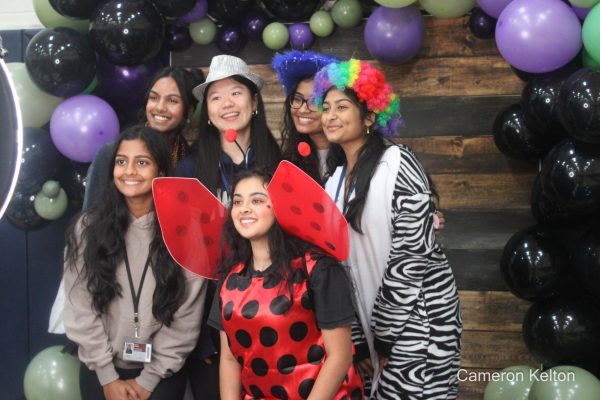
To counterbalance the academic strain, the school organizes a variety of senior events throughout the year, from Boo Bash to senior trips, prom, and the Senior Walk. AP Shannon Gray, who oversees these traditions, said the celebrations give students something to look forward to.
“When I came to Clements, they had the normal senior things,” Gray said. “But I just wanted to provide more opportunities to celebrate the seniors, because the students have been in kindergarten, gone through school for 12 years. So, this journey of 13 years of school is coming to an end, and I think that should be celebrated.”
Gray emphasized that the organization of these senior events is a collective effort that demands collaboration and teamwork. A lot of work goes into each event to ensure its success.
“I work with our VIPS [Very Important Parents] and different organizations at school to really celebrate them all year long, because it is a big accomplishment,” Gray said. “Particularly in the spring, we start doing a lot more, with the accepted posters and the senior walk. I’m always trying to think of things that we can do in addition and I’m always open to ideas.”
Amidst the chaos of college applications, the drag of senioritis and the heartwarming moments shared during senior events, McMennamy highlights an important truth: it’s not so much about the destination as about the journey. She reminds students that the “perfect” school does not exist in a vacuum, but instead, it is shaped by their attitudes and the memories they cultivate along the way.
“You’re never going to know what the right choice is,” Mayo said. “But I firmly believe that when seniors leave, they’ll go to the place that they’re meant to be for that time period, that season. I just know that in time, all of the students are going to find something that they are uniquely great at. It’ll feel good to them, and it’ll all come together.”