A lifetime of memories in 249 pages:

High school feels like a blip in many students’ lives, filled with some of the best memories that never last long enough.
A touchdown celebration in the end zone.
A senior laughing with friends at prom.
A group of students hugging after a spelling bee win.
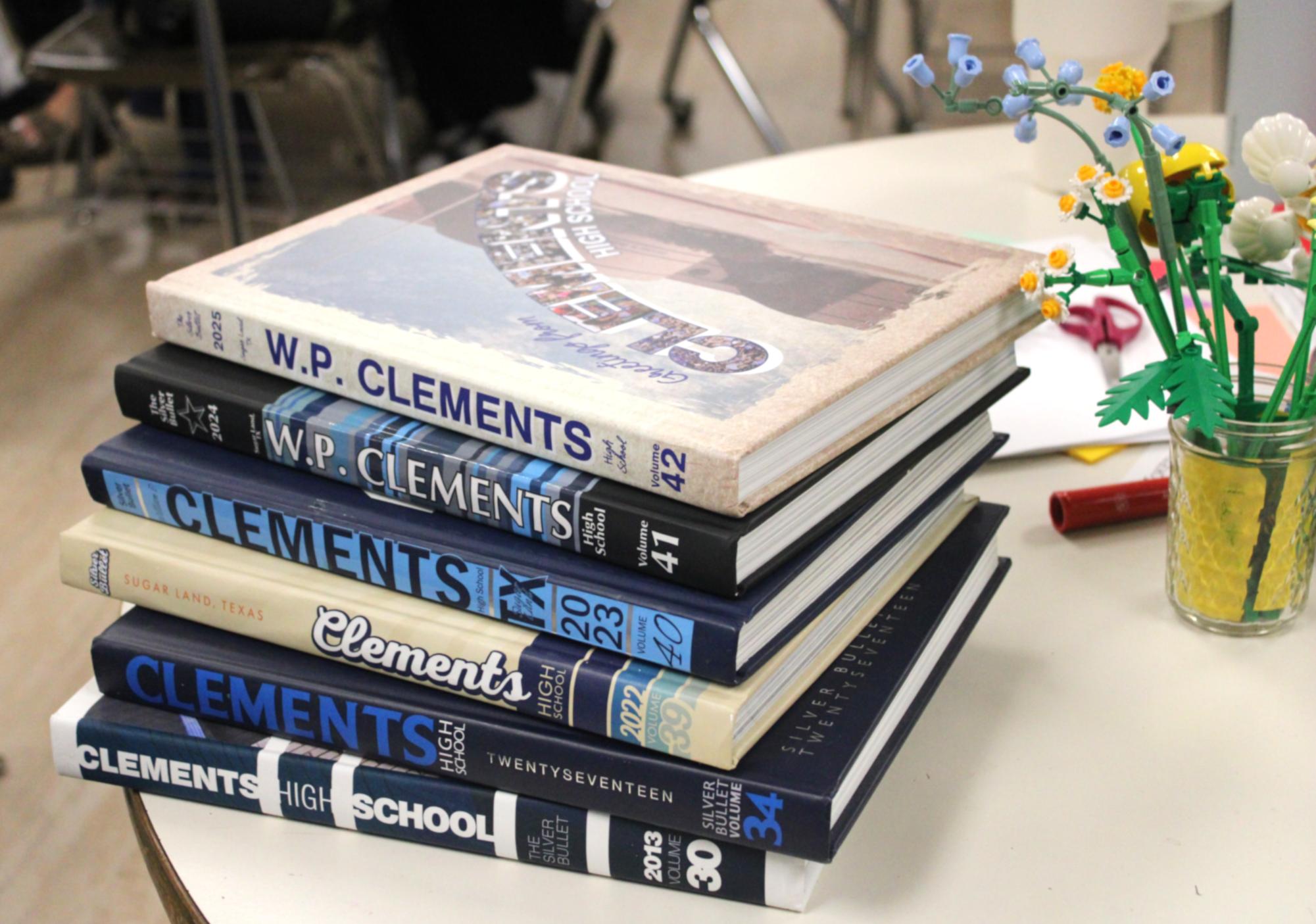
Each of these experiences flashes by in a heartbeat, becoming a precious fragment of impermanence. But the yearbook holds onto those moments, preserving them forever in 90 lb matte finish paper.
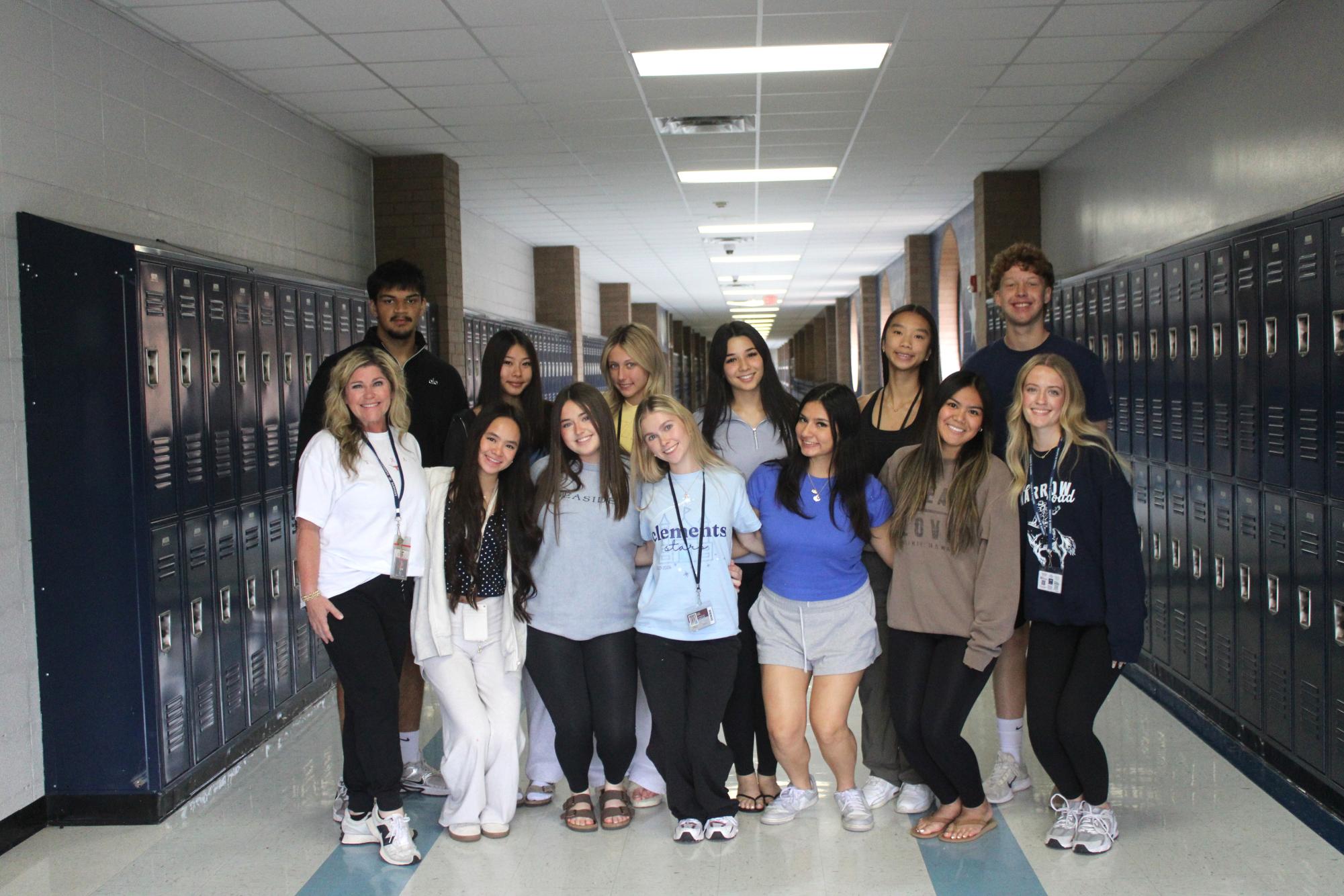
The yearbook is a student-produced, physical publication that captures the school year through photos, quotes, captions and designs. It’s published annually and highlights thousands of faces and memorable events, from sports games to school dances. Yearbook adviser Fay Mayo has led the student staff for 15 years, guiding them in crafting this keepsake from start to finish.
“The yearbook is a publication for the students, by the students,” Fay Mayo said. “So we cover every organization, sport, academic success at school. First we learn the software then it’s all about the book for that year and making sure that if one of my editors assigns a student something, then it gets done.”
In this span of 15 years Fay Mayo said that the production process has changed drastically. Earlier physical layouts and printed photos were the norm but now students build every page on glowing screens using drag-and-drop tools.
“It used to take a lot more time because we used to place things on a piece of paper, ship it away, and then wait to get our proof back,” Fay Mayo said. “Now it’s so easy because it’s all online, so there’s not a whole lot of time outside of the classroom. Back in the day, I would be up here until 7 o’clock at night, especially before a deadline to make sure things get done.”
Despite the shift to digital production, students still work towards building a physical book that is distributed at the end of the year. They design each page using Yearbook Avenue which is a web-based system provided by Jostens, producer of the yearbook. Yearbook Avenue serves as a one-stop platform for most of the work involved in the publication.
“It’s [Yearbook Avenue] like [a] Canva-on-steroids type of situation,” Fay Mayo said. “It allows us to create spreads like you would do in a magazine. You can create templates, you can mirror templates, you can reverse templates, and that’s how we design the book. And so that not every page is the same, we modify the page according to what we’re covering.”
Before creating spreads on this platform, students learn basic journalistic skills, such as taking photos, conducting interviews and writing stories, through the prerequisite class of journalism or photojournalism.
“We mainly start with a layout, it’s called a ladder,” yearbook editor Emma Fan said. “So we have what each page is going to be and how much each organization will have on a page, and then you collect photos, put them in and write captions.”
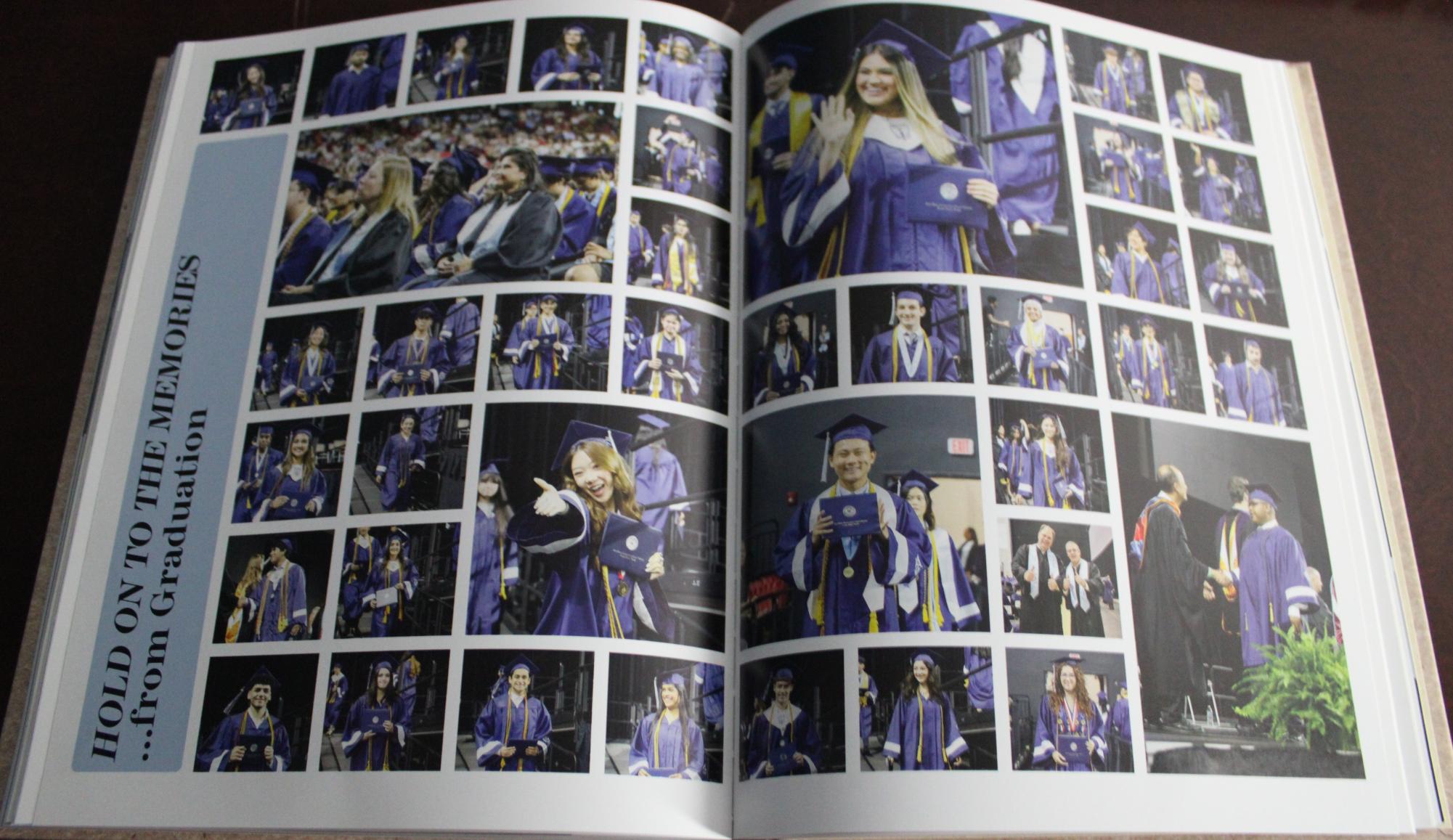
As pages begin to take shape editor-in-chief Isabel Mayo—who is the daughter of Fay Mayo—works behind-the-scenes to ensure the yearbook represents as much of the school as possible and avoids a one-dimensional approach.
“I want to reach out as much as I can through my peers to see what they want to do, how they want to be captured, who’s not in the yearbook,” Isabel Mayo said. “For example the benefit concert by ACES has never been in the yearbook so I will try to add it.”
The planning process continues at a fall convention where editors and advisers gather to decide the theme for the yearbook, which serves as a guiding value that is seen in every page. This year, the theme is “Control in Chaos,” a reflection of how unpredictable, complex and multi-dimensional student life feels across campus.
“At the conference you think about what makes your school different from all the other schools and I feel Clements is made up of so many different moving parts,” Isabel Mayo said. “My favorite part about the school is that someone can be in the orchestra, but they’re also the captain of a sport. All the kids are so multifaceted.”
Beyond the theme, which appears in layered pages brimming with photos that showcase student life, the yearbook follows a chronological structure. It starts with summer and ends with graduation.
“We move through summer to Ranger Camp, and then we go into fall and usually put freshman photos in that section,” Isabel Mayo said. “All fall sports and events like senior sunrise go there. Then we move into winter, and we’ll move into having sophomore photos and junior photos. Then we’ll move into spring, and that’s where the majority of senior stuff is held.”
Isabel Mayo further emphasized that because the yearbook is delivered in the summer, it captures the entire school year. A spring deadline would cut out major events like graduation, prom and senior events. But even after seniors graduate, the work continues because Fay Mayo returns the day after graduation to complete the final spread and finish the graduation pages.
“We try and have each student in the yearbook two times, which includes their headshot, which is in the student section, and then try to get that kid in the yearbook one more time,” Fay Mayo said. “Every year that I go back and look, I think my favorite part is the senior part. I end up doing a lot of the senior part on my own, because I want the senior editors to also be kind of surprised. But it’s all the senior fun at the end.”
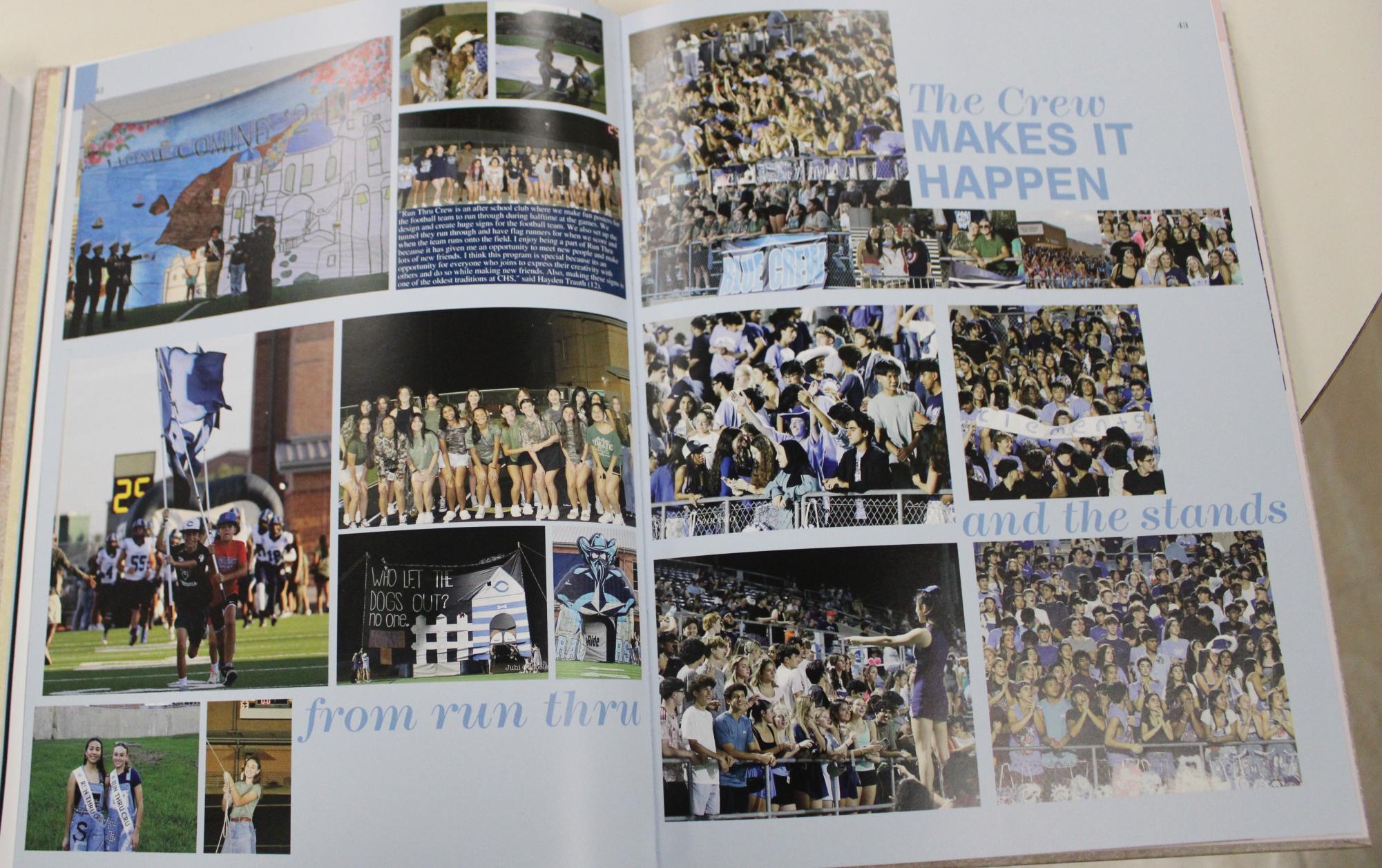
Coverage has shifted from text-heavy pages to photo-driven storytelling. Older yearbooks relied on long writing, while today’s editions focus on photos supported by captions and quotes. Student headshots come from Cady photographers, while the CHS RoundUp, the student-led newspaper, and yearbook photographers capture events across campus.
“Now kids have become so engrossed in their phone and Instagram that they want instant gratification,” Fay Mayo said. “They want to turn to the back and see what page they’re on, and what page their friend’s on and find that page. So the only stories we tell now are through the pictures, but on the side, we describe what’s happening in the picture through quotes.”
Even though the yearbook has increased its photo usage, there has been no loss in storytelling or emotional depth. In fact, RoundUp photographer Lipi Shah said that photos often speak more than words ever can.
“You can’t say everything that you’re feeling with words, but you can say everything that you’re feeling with a photo,” Shah said. “It’s good that there’s a lot of photos, because first they hold memories and tell stories, but they are also more aesthetically pleasing in the yearbook.”
Shah’s path to photography began through encouragement from the RoundUp’s former assistant editor Juhi Godbole and journalism teacher David Clayton. They inspired her to take photos and introduced her to school events and sports coverage. Since then, she has continued developing her skills through consistent photography of school events.
“Some kids love high school and playing football in high school or playing soccer in high school was the best part of their life,” Shah said. “I take photos because I want people to be happy when they’re looking at my photos. I want people to be like, ‘Oh, my god, that was such a fun time.’”
Shah covers everything from football games to prom, often moving across the field or gym to capture every angle. A rule that she lives by is capturing both action and reaction in each moment, a technique she learned from Clayton.
“If someone looks at my photo and if I get a reaction out of them, I think that’s what makes it yearbook-worthy,” Shah said. “If someone is smiling at a football game in the stands, I take a photo of that because someone is happy to be at the football game. So when you look back at that, you smile and that’s what makes a photo yearbook-worthy.”
In her quest to capture such photos, Shah faces several challenges. One of the obstacles is posting the photos in a timely manner. Beyond the pressure of the internal deadlines Shah puts on herself, she said her drive for being a “perfectionist” often takes on an obsessive nature which culminates to long photo-editing sessions.
“If I’m going to do something, I’m going to do it right,” Shah said. “So if my photo seems a little bit off or if it seems imperfect, I’m going to spend more time, but I’m going to make sure that it’s a good photo.”
Some moments she captures through her lens linger long after she leaves an event. Shah said that when she was covering the SAILS Spelling Bee she knew many of the students because she was involved with Best Buds previously and capturing their happiness made the moment feel more meaningful.
“At the end of the Spelling Bee, they were giving the students trophies and medals and I started tearing up because I was so happy,” Shah said. “Those kids were so happy that they won, and even if the kids that didn’t win, they were happy that their friends won. I felt so happy that I was there to capture their special moments. I was so proud of them.”
Athletes also feel the significance of being featured in the yearbook. Junior Trey Rivera, the captain of the football team, hopes that when students flip through the yearbook in the future, they will see a team that is disciplined and continually improving.
“Being able to be in a position where I’m able to be a voice for my team, I really value that,” Rivera said. “And I look forward to the spirit days section of the yearbook because I like being able to see everyone participate in our spirit days.”
The moments on the field are fleeting, emotional and easy to miss, which is exactly why the photographers work to preserve the images in print long after the season ends.
“The players, Trey Rivera and George Jreissaty, were both at the end zone and they were praying before the game,” Shah said. “I took a photo of that and I think that was such a touching moment because you can really see the passion they have for football. You can see how much football is connected to their faith.”
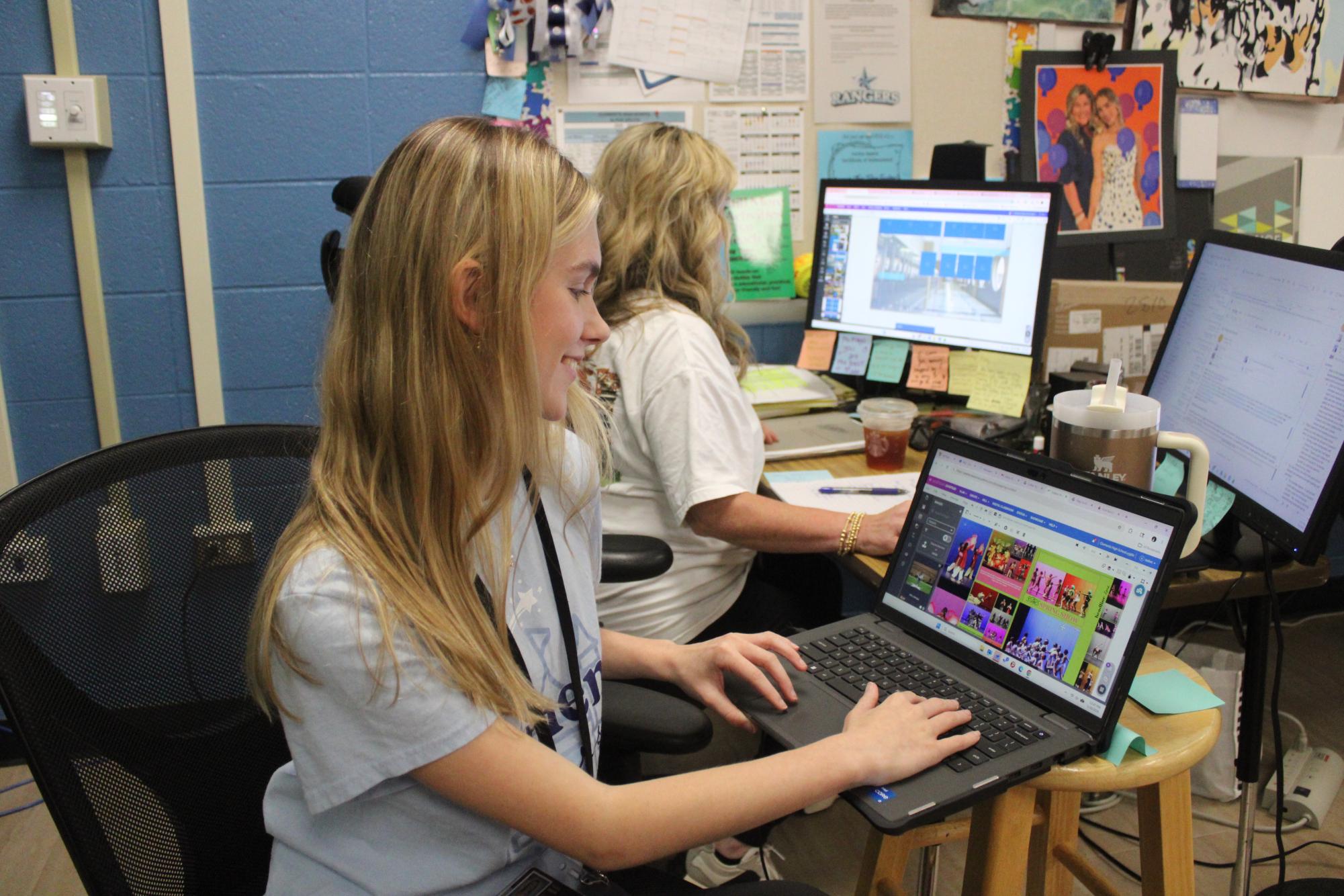
While the photographers work to capture emotion, Isabel Mayo oversees the production. To guarantee that all work is completed on time, the editors establish deadlines throughout the year. However, there are occasions when the production veers off course. Nevertheless, Fay Mayo noted that the yearbook classroom is great at self-regulation and manages to get back on track.
“I would love to have a lot of deadlines, but my other editors and members can get busy with things because school is a big commitment,” Isabel Mayo said. “If they need a little more lenience, I’m okay with that. But Ms. Mayo really helps us with pacing. Having fall done by winter, having winter done by spring, and then spring it gets a little crazy because everything happens there and then we are like cram, cram, cram. But Ms. Mayo’s good about either calming us down or hyping us up.”
Even with tight deadlines, Isabel Mayo has learned that the yearbook only comes together when everyone takes ownership of a piece of it. She said that she can be a bit of a “control freak,” but over time she has grown into her role by teaching others, distributing work and trusting her team to carry the work.
“I divide it so that one or two people are in charge of tagging,” Isabel Mayo said. “Making spreads is a thing and so I give it to another member. And I also ask them, like, who wants to do this? I don’t just start saying that you are going to do this. I pick out the photos, and then they arrange it how they want. Then, I have one person reach out for quotes.”
But the work doesn’t end once the pages are designed. After the layouts are created and the photos are selected, the team enters one of the most demanding phases of production: fact-checking.
“I see the book so much, and I look at it, and look at it,” Fay Mayo said. “I mean if I just produced a page, I probably looked at it for three or four weeks. I had the editor and the co-editors look at it. I even sent the paragraph to my mom, because my mom is an English teacher, to make sure it was written correctly.”
Still, there are many areas where human error can occur.
“The yearbook goes through a bunch of editing steps,” Fay Mayo said. “We’re about to do a name check, so the registrar gives me a list of every student per grade in alphabetical order. I have a student that looks at a name on a sheet of paper, looks at the spelling in the yearbook, and checks if they match. And that’s a list of 2,600 kids. Is she going to get something wrong? Yes. But we do our best.”
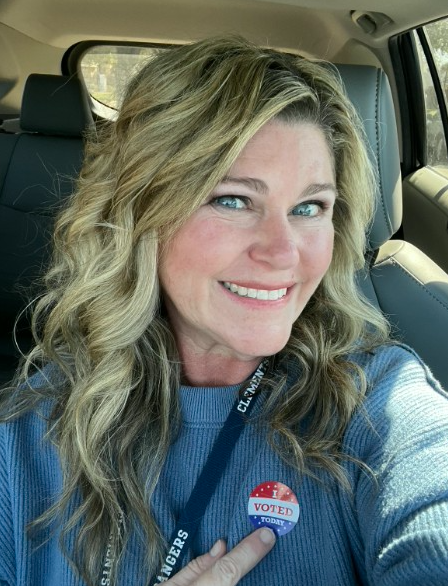
Marketing is another responsibility that the yearbook takes seriously. When Fay Mayo took over the yearbook 15 years ago, the book cost $90, and despite rising expenses—across the board from gas prices to college tuition—that price has remained the same. The staff keeps the book prices steady through the sale of senior advertisements which are showcased towards the end of the yearbook.
“The problem with ads is space is limited and it is first come, first serve,” Fay Mayo said. “So get your ad. You may not want it, but your parents or guardians may want it because they want to give you a shout-out after all the hard work that you’ve done.”
The yearbook also receives direct contributions from students, including interviews and senior quotes. Since the yearbook is a public document, Mayo tries to filter the information to ensure that quality material enters the book.
“The rule of thumb I have is that as long as it’s not hurting somebody, threatening, anything that is really off-color, I allow it to happen,” Fay Mayo said. “I’ve had the FBI, CIA, NASA, people from public office come and look at a yearbook because someone’s running for office. So I always tell my kids that if you think what you are writing now may not seem that funny or good in a couple of years, then you probably shouldn’t put it in the book because if published it can be viewed by everyone.”
Despite the many deadlines, tedious tagging process and the barrage that is fact-checking, the staff still has a fun time in the classroom. For Fan, the Jostens Conference for yearbook is something that really stands out.
“A bunch of schools go to this one location and they have a big presentation about what photos should look like and what your yearbook should be like and the different types of ways you can make it more engaging,” Fan said. “They tell us what fonts to use, what words to use and then there’s food and games.”
Isabel Mayo’s favorite is the entire process of creating the spreads, reading quotes from captains and showcasing the diverse aspects of the school. Although the students she features in the book may not know her, she feels a connection to them as she follows their journeys throughout the school year while flipping through the pages.
“It really shows you the teamwork and the relationships they build and getting to see that is so precious to me,” Isabel Mayo said. “I love knowing when people have passion about other things too. My favorite thing is on delivery day when we hand out the yearbooks. Kids will just sit there with their friends and be like, ‘Oh my god, I see me. Look, I’m right here.’ I just think it’s really sweet and I love being a part of that.”
The yearbook’s pages showcase Shah’s work from the school year. Each time she flips through and sees her photos telling a story about someone from school, she feels a sense of pride.
“I feel proud that I captured something worth taking,” Shah said. “I feel happy that someone else recognizes the amount of work that I’ve done, and they put my photos in the yearbook. It’s just a cool feeling to see your hard work being poured out into the yearbook.”
Ultimately the yearbook is a memory token where fleeting moments are given permanence. Behind every page is the unseen work of students capturing laughter, victories, friendships and milestones. Years later, when the blue hallways and school building fade into memory and those moments have long passed, the yearbook will continue to bind students to their past selves and let them hold a piece of their most cherished memories in their hands. And while this will be the last yearbook that Fay Mayo is producing, the last decade and half has been one she will continue to cherish and hold close to her heart.
“I hope that they feel nothing but joy, and it takes them back to that moment,” Fay Mayo said. “I just hope that they always think of it as such a special…memory stake. That if it’s on your coffee table, you look at it. You may not open it, but you just smile and feel happy.”