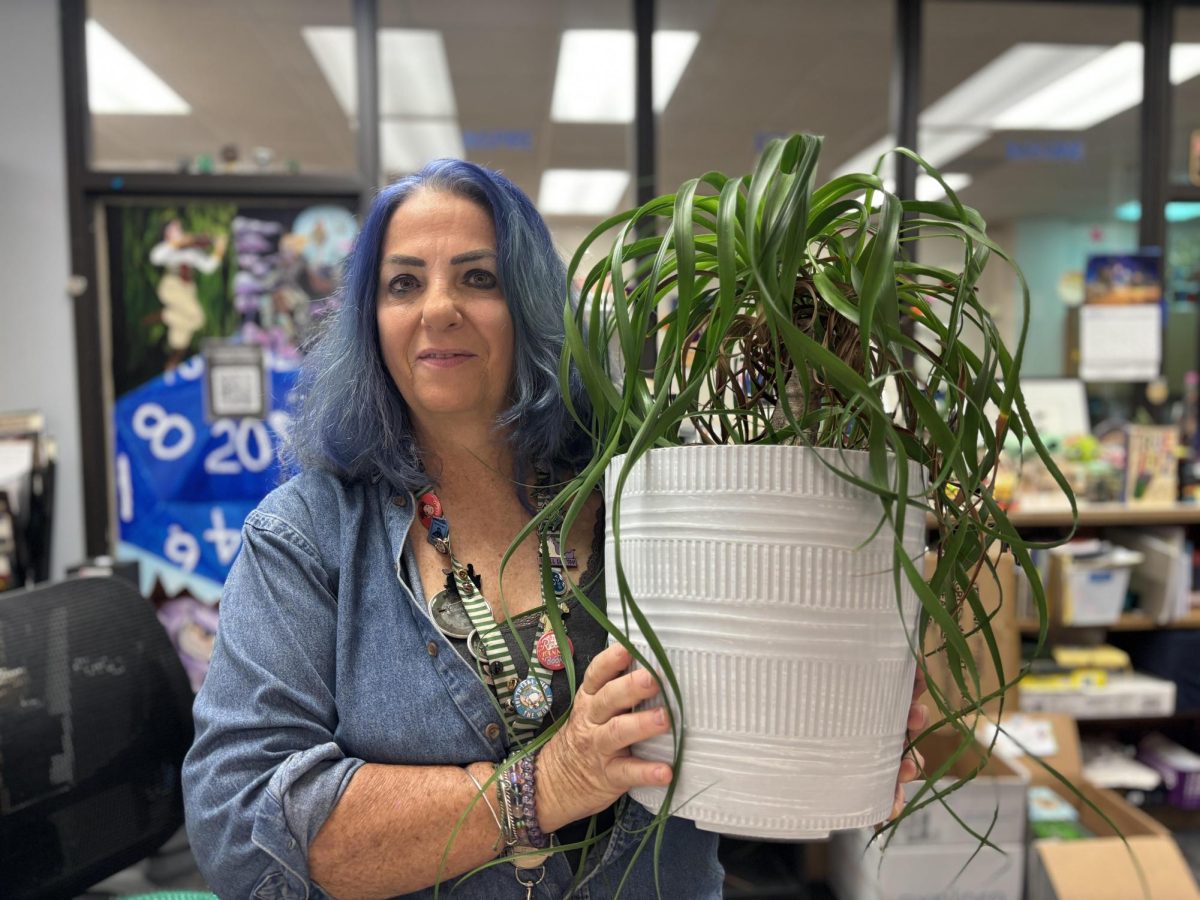




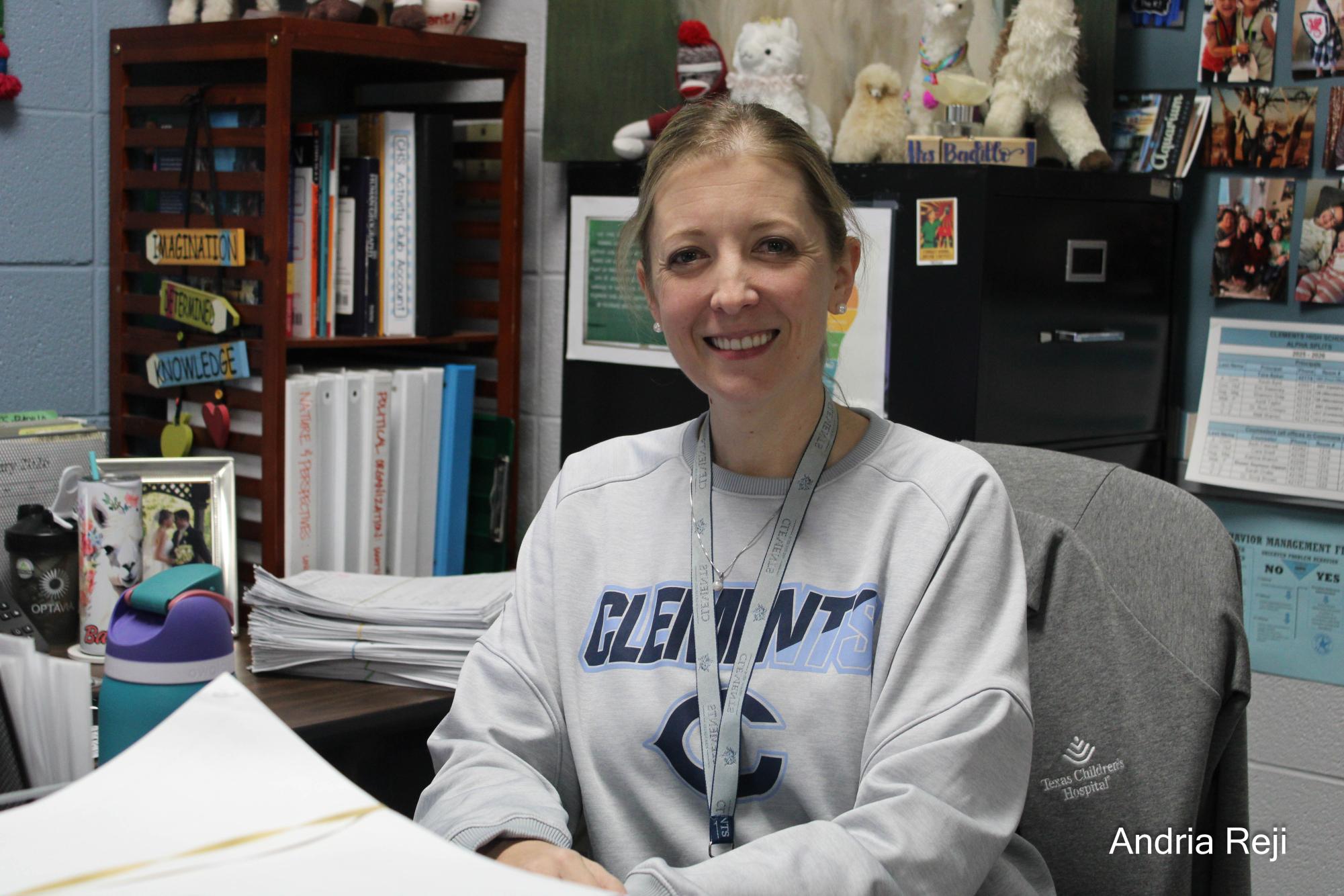
Some teachers become part of the school’s identity. For nearly 20 years, AP Human Geography Christine Badillo has been one of those teachers. Known for her energy, dedication and unmistakable school spirit, she has shaped the student experience in ways that extend far beyond her classroom.
Although she describes herself as “a teacher first,” Badillo’s role stretches across almost every corner of campus life. She teaches freshmen, co-advises Student Council, sponsors Model UN, helps run Ranger Camp and still finds time to support faculty events. Her goal is simple: make school a place students genuinely enjoy coming to.
“For a lot of teenagers, school is awful and it’s boring and they call it a prison,” Badillo said. “But with me, my hindsight with high school is you only get it once.”
Her involvement in student organizations has had a major impact on campus culture. When she first took over Model UN, the club had only eight members. Since then, it has grown to nearly 80, with students competing across the state and even pursuing careers in international relations, government and public policy.
“I have gotten a lot of kids who that became their career choice,” Badillo said. “They joined Model UN because they were my students. And they were like, ‘Well, let’s see what this is,’ and then they fell in love with it, and they did it in college.”
Student Council has also flourished under her leadership. Co-advisor Ricardo Garcia shared how their partnership began: he needed someone who could bring energy and enthusiasm to the organization, and she was the first person he thought of.
“Students are naturally receptive to everything she’s about,” Garcia said. “She inspires kids to join things and have school spirit.”
Their working relationship has grown into a close friendship. Garcia describes her as someone he trusts for advice, both on Student Council and in life.
“She’s warm, welcoming and not afraid to embarrass herself if it’s for a good cause,” Garcia said. “Students gravitate toward that.”
In the classroom, Badillo blends structure with humour and conversation. She jokes about loving PowerPoints, but her lessons are far from dull. She encourages questions, embraces curiosity and openly admits when she doesn’t know something, then looks it up later.
“I just want them to try to get involved themselves with the material,” Badillo said.
Her students learn more than geography. They learn how to stay organized, how to think from different perspectives and how to approach challenges with a positive mindset. Garcia believes students also learn “how to be good humans overall,” something that becomes clear in the way many continue talking to her long after graduation.
“I’ve had a few kids who fell in love with urban planning, and urban geography, and social justice through AP Human,” Badillo said. “And they took that and [it] became their major.
Despite her long hours at school, Badillo keeps her evenings focused on family. With twin 9-year-old boys involved in sports, music and homework, her time at home is dedicated to being a mom. Her experiences as a parent—especially after one of her children faced a serious medical challenge—have shaped her approach to teaching. She values family time and encourages her students to prioritize it as well.
“One of my kids had cancer,” Badillo said. “It really changed my view on the family unit and how much I want to ask of my kids when they go home, like I want [them] to go spend time with [their] family.”
One of the things that sets Badillo apart is her enthusiasm for school spirit. Spirit Days are her favorite, and she commits fully: costumes, face paint and all. She believes in the importance of staying playful.
“We do not stop playing because we grow old,” Badillo said. “We grow old because we stop playing. I love being silly and crazy.”
Her willingness to be silly makes school feel lighter, especially during stressful times. It also shows students that joy and hard work can coexist. Badillo doesn’t expect anyone to remember every vocabulary word or every map they labeled. What she does hope for is much simpler.
“I hope they remember my room,” Badillo said. “I hope they remember having fun and laughing. That if there was one place they could go in the building, it would be my room.”
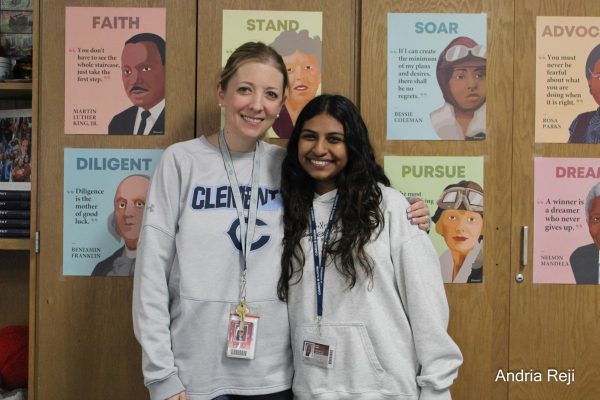
Senior Emma John, Student Council Executive President, has known Badillo since freshman year. She remembers walking into AP Human Geography expecting strict, scary high school teachers—and getting the complete opposite.
“She was so energetic and kind,” John said. “She made sure we had fun. Even now in Student Council, when we’re stressed, she’s the one saying, ‘It’s okay, we’re going to be okay.’”
Walking into Badillo’s classroom doesn’t feel like walking into a typical class. The walls are covered in positive messages, and there are always students hanging around, brightening the atmosphere with energy and conversation. In a place where stress is everywhere, her room is like a reset button.
“You’re never scared to ask questions in her class,” John said. “She makes it feel normal to not understand something.”
It’s a space where mistakes aren’t embarrassing, where being loud isn’t a problem and where students feel seen even before any lesson begins. While Badillo’s resume is impressive, her students said her real impact can’t be measured in titles or years of experience.
“Even when we’re overwhelmed, she’s the one reminding us we’re going to be okay,” John said.
That sense of calm is something many students mention. In school—where deadlines, grades and pressure build quickly—her classroom becomes a place students rely on.
“She actually asks how you’re doing,” John said. “Not just like a teacher question, but like she really cares.”
For many students, that small difference matters more than any assignment or test. High school can feel repetitive with the same routines, same stress, same long days, but students said Badillo brings something rare to campus: consistent energy. Whether she’s dressed up for Spirit Days, laughing with students before class or encouraging them during stressful weeks, her presence is hard to ignore. Even when workloads pile up, she keeps the atmosphere light without lowering expectations.
“She’s just a bright person to see,” John said. “She can start your day or even end it on a better note.”
While AP Human Geography is known for its demanding curriculum, students said Badillo’s teaching style makes the material feel far more approachable. Rather than relying on traditional lectures alone, she describes her approach as a “conversational lecture,” blending structured instruction with discussion, humor and interaction.
“She doesn’t just talk at us,” John said. “She actually involves everyone, which makes it easier to stay focused.”
The balance of conversation and lecture, students said, transforms the classroom dynamic. Lessons become engaging rather than overwhelming, allowing students to actively participate instead of passively listening.
“She makes you want to try,” John said. “Not because you’re scared of failing, but because you don’t want to disappoint her.”
By encouraging conversation, Badillo creates an environment where learning feels less rigid and more collaborative. Students see only a fraction of a teacher’s day, and Badillo emphasizes that teaching extends far beyond the classroom period. Planning lessons, grading assignments and revising material all require hours of work outside of instructional time.
“Teaching is more than an eight-hour-a-day job,” Badillo said. “We prep, we teach all day, and then we still have to grade and replan…We don’t just give work to give work. Teachers actually hate doing work too.”
Students often don’t realize the level of preparation involved, but Badillo believes transparency helps bridge that gap.
“People forget teachers are juggling so much behind the scenes,” John said. “But you can tell she puts a lot of effort into every class.”
Despite the workload, Badillo said student engagement makes the effort worthwhile. One of Badillo’s defining beliefs is that teachers are not expected to know everything. Teaching geography, she said, means constantly learning, adapting and exploring new ideas alongside students.
“Sometimes students ask really thoughtful questions, and I’ll say, ‘I don’t know,’” Badillo said. “Then I’ll spend my free time looking it up…I get to learn at the same time the kids are.”
Rather than seeing uncertainty as a weakness, she embraces it as part of the learning process. That shared curiosity, students said, helps create a classroom culture built on exploration rather than pressure.
“I get to learn at the same time the kids are,” Badillo said.
After nearly 20years at Clements, Badillo said her decision to stay has never been complicated. While she credited students for continually motivating her, she also pointed to the faculty community as a major influence.
“We have really amazing students here,” Badillo said. “But my coworkers are absolutely amazing. I will retire from Clements.”
For many students, that long-term commitment reinforces the impact she has had on campus—not only as a teacher, but as a consistent and trusted presence.
“You can tell she genuinely loves being here,” John said. “It’s not just a job for her…She’s just one of those teachers you know will always be part of Clements. She’s the reason a lot of kids want to come to school.”