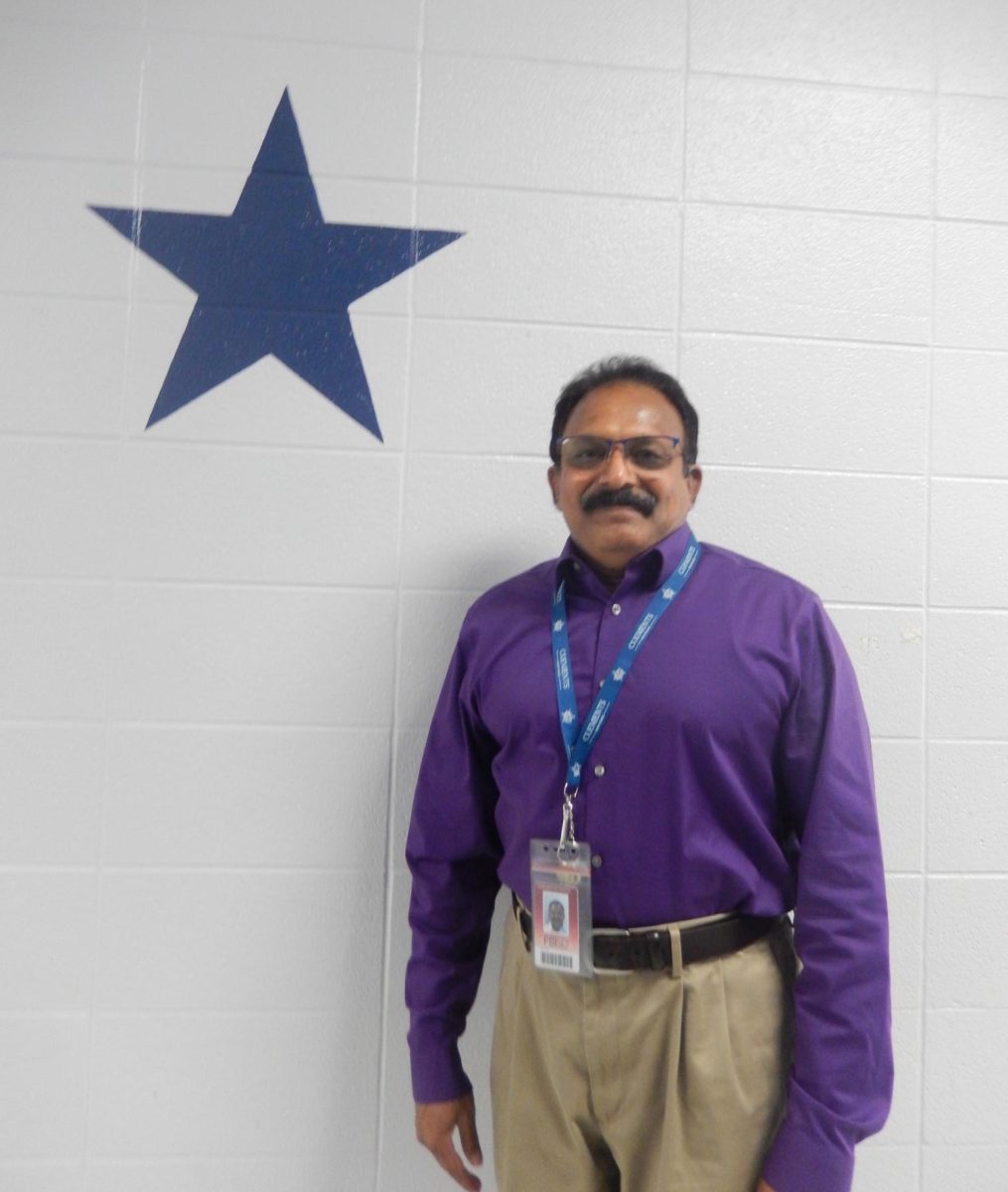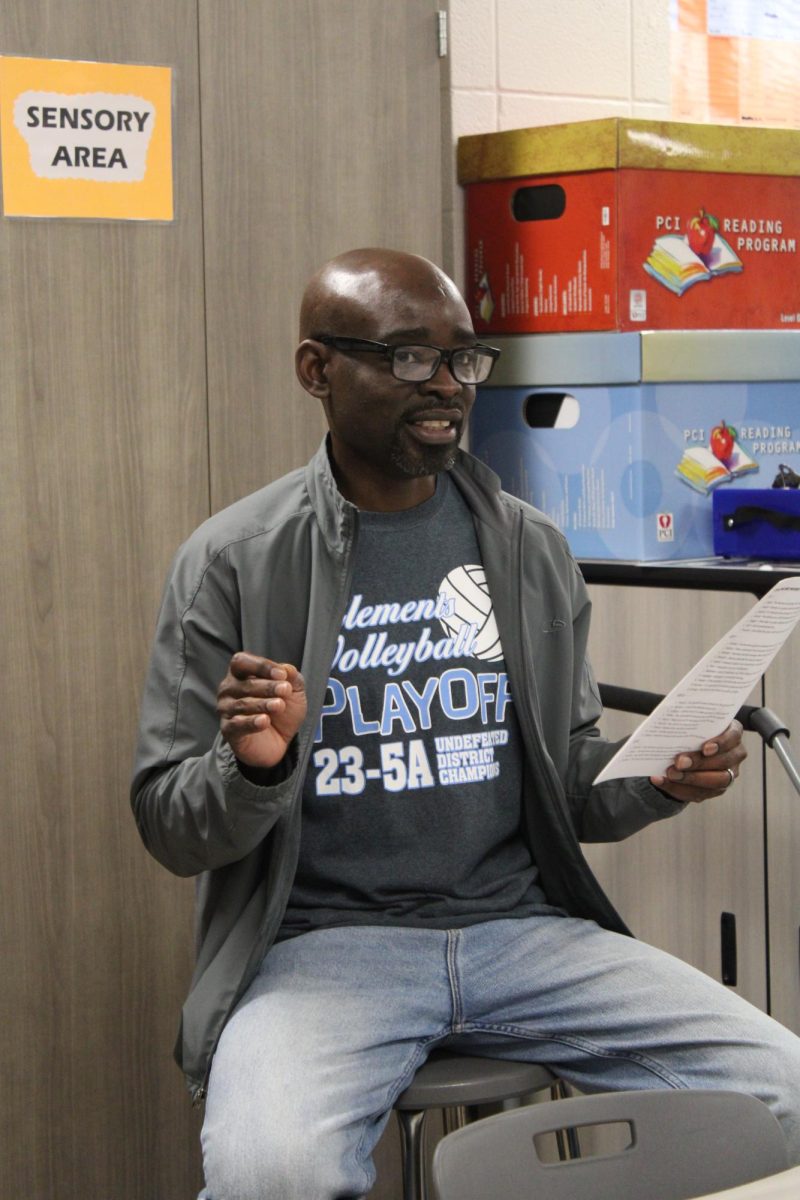
Special education teacher Eno Usanga has been teaching at Clements since August of 2008. Despite not wanting to be a teacher when he was younger, to him, teaching has become a source of joy and fulfillment. Even in the way he speaks about his career, his passion for his work is blatant.
“If you had told me that I would be a teacher in a classroom about 30 years ago, I probably would have shoved you in the head,” Usanga said. “I stumbled into teaching by being a substitute teacher, because I was just ready to be busy and get something done. I figured [since] I’m in here, I love it, [then] let me become a teacher and just go all in.”
When Usanga began his career, he taught in a self-contained classroom—teaching only functional courses to one group of students. In the past few years, he narrowed his scope to focus on English and reading.
“I also teach vocational skills, speech, [and] health, all in here,” Usanga said. “Employability skills to teach the kids how to gain experience and exposure to how to work in a job environment and stuff like that.”
Usanga admits that his job is not for everyone: you need to prioritize passion over pay. For Usanga, however, the passion outweighs everything else.
“You can get stressed out very easily if you don’t know how to tolerate what comes with the kids that have special needs,” Usanga said, “The kids have different disabilities. Some have two, three, four disabilities as one kid, and some have behaviors that could be very aggressive or very severe.”
While there is pressure that comes with the job, he nevertheless regards teaching as a special honor. In the end, Usanga said that while “no one can pay you enough” for what you do, to him, the payoff is in his students’ success.
“I’m helping to mold these kids to become the best version of themselves,” Usanga said. “I can’t do magic. I wish I had the magic wand to just wave and just change them all around but I really can’t do that. What I can do is invest my time in their lives as they’re growing up to be adults because this is high school; this is their last stop before they go into the real world.”
Usanga believes all his students are at different levels of their potential, and his job is to bring out the best in them.
“The way I teach them is the way I would teach kids in the general classroom, 100%,” Usanga said. “I know their potential, so I push them because if you don’t push them, they will never get to their potential, and if they don’t get to their potential, for me, I fail as a teacher.”
Usanga stresses that more work in special education is much needed, especially regarding the teacher shortage.
“No profession would exist without teachers,” Usanga said. “We teach everybody: engineers, architects, whatever it is. We teach them.”
Despite its challenges, Usanga’s passion for special education outweighs all else. Fulfillment, for him, comes from shaping his students’ lives and pointing them in the right direction.
“Passion drives me like anything else,” Usanga said. “It keeps bringing me back. I’ve always said to anyone, the day I stop coming back here is when I have the most smile on my face…Now I always leave [work] with a smile on my face, and I come back with a smile on my face, so I’m good to go.”