It seems like every week a new form of slang enters the hallways. One moment it’s Italian brainrot and the next it’s “67”. Slang spreads faster now than ever with the use of TikTok and Instagram, but not everyone can keep up. As new words become a part of teenagers’ vocabulary, older words leave, showing just how slang is constantly evolving.
Slang isn’t new, but the way it is spreading is. What used to take years to spread can now happen overnight. One viral video or trend is all it takes for a new phrase to be picked up by millions of people. For students, slang is a way to fit in and connect with friends, but even they can admit it is hard to keep up at times.
“Last year I used ‘skibidi’ a lot, but now it [is] like nonexistent in my vocabulary,” junior Raquel Arceneaux said.
The term “brain rot” is a great example of how terms can spread through social media. TikTok and Instagram are widely used by students all over the world, making it much easier to turn a single saying into a nationwide trend. What starts as an inside joke between influencers can quickly become a part of students’ conversations at school, proving how powerful social media presences can truly be.
“Honestly [slang] spreads in person first, then makes its way to social media,” junior Madalyn Crandall said. “People start joking about it in person, and then it eventually trickles down onto their page.”
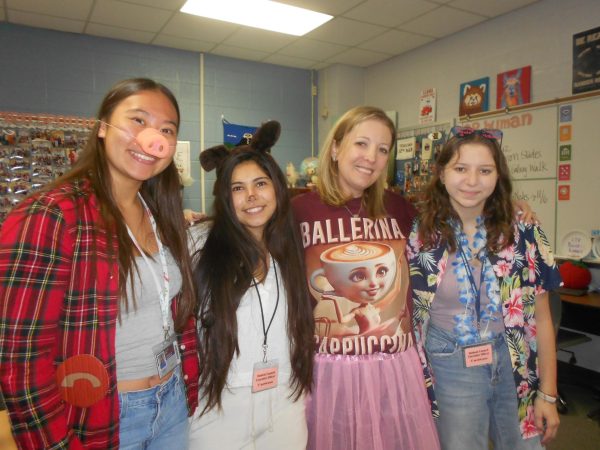
Slang changes so fast that it even causes splits between members of Generation Z (1997-2012), not to mention cross-generation gaps. What sounds funny to some age groups might go over the heads of another. Adults usually find it harder to keep up, considering their lack of exposure to younger people using said slang and their more “mature” humor.
“It’s embarrassing [when adults use slang],” junior Lauren van Wunnik said. “It ruins the entire word.”
While some students disapprove of teachers using slang, others find it funny or endearing. Some teachers try to keep up with the slang so they can stay connected with their students, while many others say that the phrases change too fast to keep track. By the time that the teachers catch up and start using words like ‘rizz’, the students are long past that.
“I enjoy [using slang], just because it makes the kids cringe,” student council and calculus teacher Ricardo Garcia said.
Teachers also have mixed opinions of slang in the classrooms. The most common thing teachers have said is that it distracts the kids from the lesson at hand, however some say it makes class more fun and engaging. When used in the right context, slang can help make a classroom environment more lively, but when used too much or at the wrong time, it can be a distraction and cause students to withdraw from the task at hand.

“Most of my students, they only use [slang as] a brain break,” AP human geography teacher Christine Badillo said. “If it was getting into the actual work they turned in, then it could be disruptive.”
Whether it’s brain rot, “67” or the next phrase that blows up online and makes its way into the hallways, slang is here to stay. It moves fast, but it also reflects how students think, allows them to express themselves and gives each generation its own unique voice. Even if adults can’t decode it, students like to know what each other means, and it has become one of the clearest ways to connect with others their age.
“If I was up there teaching, and I find an opportunity to integrate a piece of slang or a meme that would make something more memorable, then I think that it adds value,” U.S. History teacher Meredith Meese said. “If it’s something we’re using because it helps grow our bond, our rapport with one another, and we can find a way to make it work within the context of our class…I don’t have a problem with slang in the classroom.”